



















The Safest (and Most Organized) Way to Handle Sensitive Paperwork
To Shred or Not to Shred?
If your paper piles grow the second tax season rolls around, you’re not alone. Even in a world of online banking, digital statements, and paperless everything… sensitive documents still show up in our homes all the time.
So the question is: do people still need to shred personal documents today?
Short answer: yes — and in many cases, more than ever. Let’s walk through what to shred, what to keep, and the simplest way to stay secure and organized without turning your kitchen counter into a filing cabinet.
Why Shredding Still Matter (Even in 2026)
Identity theft isn’t just a “hacker problem.” A lot of it happens the old-fashioned way: someone finds paperwork with personal information on it.
Even if you don’t think your trash is “interesting,” these items can be enough to cause problems:
- Account numbers
- Medical details
- Insurance information
- Tax documents
- Signatures
- Password hints or security question answers
If it contains personal data, it should never go straight into the trash.
The Golden Rule; If It Has “Proof of You”, Shred It
Here’s a simple guideline we use with clients:
✅ Shred anything that includes:
1) Your identity
- Social Security numbers
- Driver’s license or passport info
- Birth certificates (if you’re discarding copies)
- Old IDs and expired cards
2) Your money
- Bank statements (if they show account numbers)
- Credit card offers or pre-approvals
- Loan paperwork
- Pay stubs
- Retirement account statements
3) Your taxes
- Old tax returns you no longer need
- W-2s, 1099s, receipts with identifying details
- Tax documents with SSNs or EINs
4) Your health
- Medical bills
- Prescription paperwork
- Insurance claims (EOBs)
5) Your home + services
- Utility bills (especially if they show account numbers)
- Mortgage statements
- Contractor invoices with your address + payment info
What You Don’t Need to Shred
Not every paper in your home is a security risk.
♻️ These are usually safe to recycle:
- Grocery receipts (unless they show a full card number)
- Store coupons
- Generic flyers
- Kids’ school papers (unless they include personal details)
- Most packaging slips without personal info
If it’s just clutter and doesn’t identify you, recycle it.
The Most Organized Way to Handle Personal Papers (Without Getting Overwhelmed)
Here’s the easiest system we recommend as tax time approaches:
Step 1: Create a “Paper Processing Station” (One Spot Only)
Pick one place in your home — a drawer, basket, or file bin — and set it up with three categories:
1) TO FILE
For documents you need to keep (tax forms, insurance, important statements)
2) TO SHRED
For anything sensitive that you’re done with
3) TO ACTION
For things that require a next step (pay, call, scan, sign, submit)
This stops paper from spreading across every surface in your house.
Step 2: Choose the Safest Shredding Method for Your Household
Not all shredding is created equal.
⭐ Best option: Cross-cut shredder
A cross-cut shredder turns paper into tiny pieces (much safer than strip shredders).
If you shred regularly, this is the most secure and convenient option.
Good option: Shred at a local shredding event
Many towns, banks, and office supply stores host shredding days. Great for big purges.
Highest-security option: Professional shredding service
If you have years of paperwork, business documents, or you’re handling estate paperwork, a professional shredding service is a great choice.
Step 3: Don’t “Sort Forever” — Set a Timer
The biggest mistake people make is trying to organize every paper perfectly in one sitting.
Instead, try this:
🕒 15 minutes once a week
or
🕒 30 minutes every Sunday
In that time, process whatever is in your “paper station”:
- File what matters
- Shred what’s sensitive
- Handle action items
Consistency beats marathon organizing every time.
Step 4: Know What to Keep for Taxes (and for How Long)
This is the part people worry about most — and understandably so.
A safe rule of thumb:
Keep these long-term (7 years is a common standard)
- Tax returns
- W-2s / 1099s
- Proof of deductions
- Business income/expense records
Keep these short-term (until verified)
- Monthly statements (once reconciled and no longer needed)
- Utility bills (once paid and confirmed)
- Credit card statements (once reviewed)
Keep forever (in a fire-safe spot)
- Birth certificates
- Marriage licenses
- Social Security cards
- Property records
- Estate documents
- Titles and deeds
Pro tip: Create one “Forever File” so these never get mixed into everyday clutter.
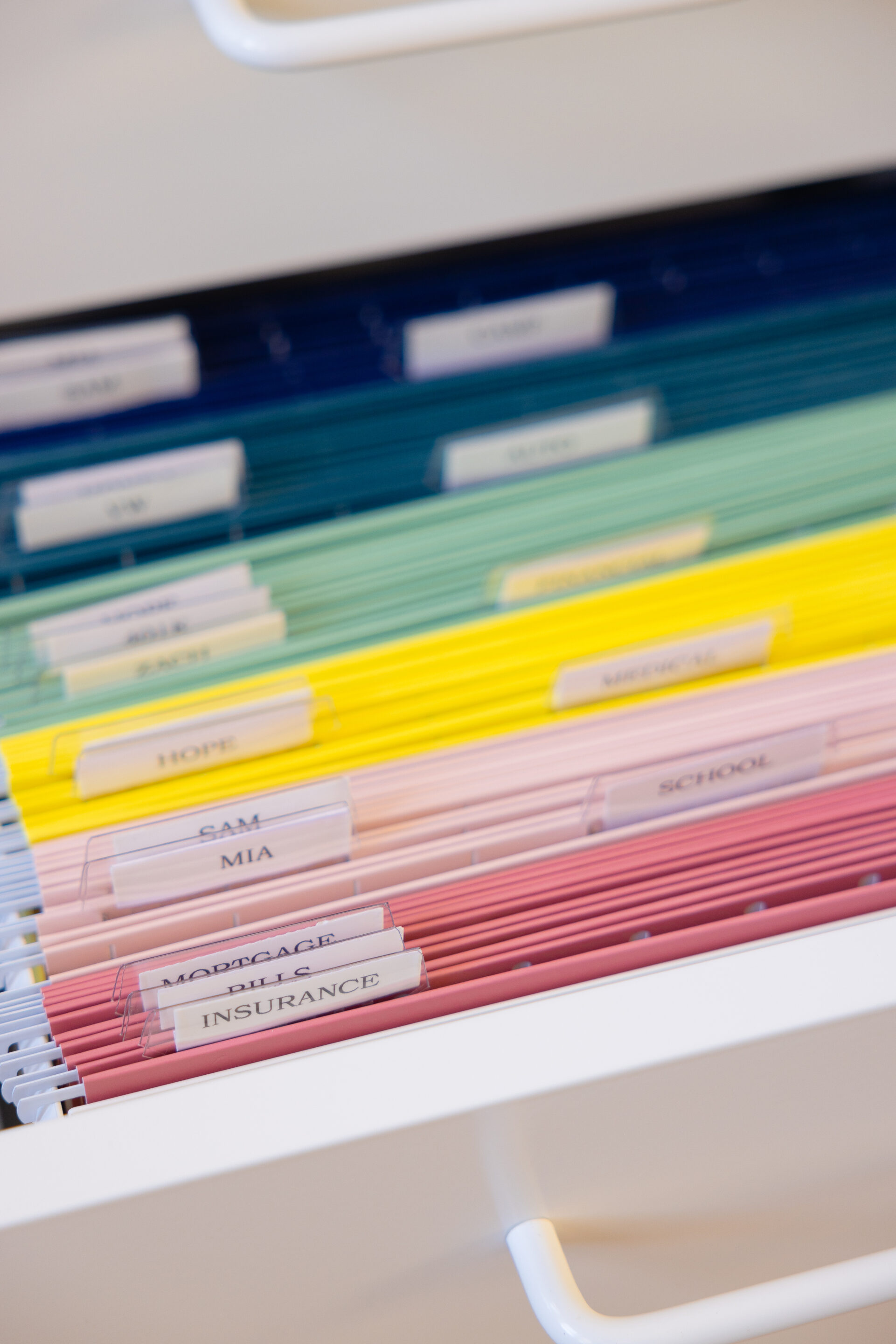
Step 5: Use a Simple Filing System That Actually Works
You don’t need 47 folders. You need a system you’ll maintain.
We recommend one portable file box with broad categories:
- Taxes
- Medical
- Home
- Auto
- Insurance
- Kids / School
- Income / Pay
- Legal
- Receipts (Short-Term)
Then once a year (or at tax time), you can tighten it up if needed.
Bonus Tip: Don’t Forget Digital Safety
If you’re scanning papers, be mindful of where they go.
Safe storage options include:
- A password-protected cloud folder
- An encrypted drive
- A secure document vault
And please don’t leave scans sitting in:
- Your camera roll
- Email attachments
- Random “Downloads” folders forever
The Bottom Line: Yes, Shred — But Make It Simple
In today’s world, shredding is still one of the easiest ways to protect your identity.
The best approach is a system that’s both secure and realistic:
✅ One paper station
✅ Three categories (File / Shred / Action)
✅ A weekly routine
✅ Cross-cut shredding or secure shredding events
✅ A simple filing system for what truly matters
Want Help Setting Up a Paper System Before Tax Season?
If your paperwork has piled up and you want it handled quickly, safely, and without stress — we can help.
At DDH Home Organizing and Move Management, we help families create secure paper systems that are:
- easy to maintain
- tax-time friendly
- clutter-free
- built around real life (not perfection)
Contact us today to get started.