




















Letting Go with Grace: A Practical Guide to Downsizing
Because Every Object Has a Story and You Get to Decide Which Ones Go with You
There is a particular kind of silence that fills a home you’ve lived in for thirty years when you begin to sort through it. The guest room closet holds three decades of birthday cards. The garage holds your late father’s tools. The kitchen junk drawer holds everything else — rubber bands, takeout menus from restaurants long closed, a key to a lock no one can identify anymore.
Downsizing is not just an organizational task. It is a deeply personal reckoning with time, identity, and what we choose to carry forward. If you’re in the middle of it, or just beginning to consider it, we want you to know something first: it is supposed to feel hard. And it’s okay if it does.
“Downsizing is not about getting rid of things. It’s about making room — for the next chapter, for ease, for the people and moments that matter most.”
Why Downsizing Feels So Emotionally Heavy
Our homes are memory keepers. Every object we’ve accumulated over a lifetime carries an emotional charge — even the things we haven’t thought about in years. When you pick up a child’s first drawing or a dish from your wedding registry, you’re not just holding a thing. You’re holding a moment, a relationship, a version of yourself.
This is why downsizing — particularly later in life, or after a major transition like the loss of a spouse, a health change, or the sale of a long-loved family home — can trigger genuine grief. Researchers have found that the process of letting go of possessions activates the same emotional pathways as losing a relationship. So if you’ve found yourself crying over a vase you don’t even like, you’re not being irrational. You’re being human.
Give yourself permission to move slowly. Give yourself permission to have hard days. And give yourself permission to ask for help.
Where To Begin: A Framework That Actually Works
One of the most common mistakes people make when downsizing is trying to sort everything at once. This leads quickly to overwhelm, decision fatigue, and the very common response of closing the closet door and walking away for three months. Instead, think in layers.
THE DDH DOWNSIZING METHOD
- Start with the easy rooms first. Linen closets, bathrooms, and utility spaces hold far less emotional weight. Build momentum there before tackling the heavy-hearted spaces.
- Work in 90-minute sessions. Decision fatigue is real. Set a timer, take breaks, and don’t try to marathon your way through decades of belongings in a weekend.
- Use three categories, not two. Instead of “keep or donate,” try: Keep · Let Go · Decide Later. The third category is not procrastination — it’s permission to honor the process.
- Photograph before you part. Many people find it easier to release an object when they’ve documented it. A photo album of “things we loved” is a meaningful keepsake that takes up zero space.
- Involve the right people. Family members may want items you planned to donate. Give them a deadline, not an open-ended invitation — or the process stalls indefinitely.
Think in square footage, not sentiment. Ask yourself: does this item earn its space in my new home? Will it serve me, or will I be serving it?
The Hardest Categories To Tackle
Not all clutter is created equal. Most people find a few categories particularly stubborn, and knowing this in advance can help you prepare emotionally.
Paper and photos — often the most time-consuming, most sentimental, and most guilt-inducing category. A good rule: keep originals of documents with legal or financial value, digitize what you can, and release the rest with gratitude rather than guilt. You do not have to keep every report card to prove you were a good parent.
Inherited items — things that belonged to people we’ve lost carry a special weight. Many people keep objects they don’t love and don’t use simply because releasing them feels like releasing the person. But those we’ve lost live in us — not in their furniture. Keeping one meaningful piece and finding a loving home for the rest is not betrayal. It’s wisdom.
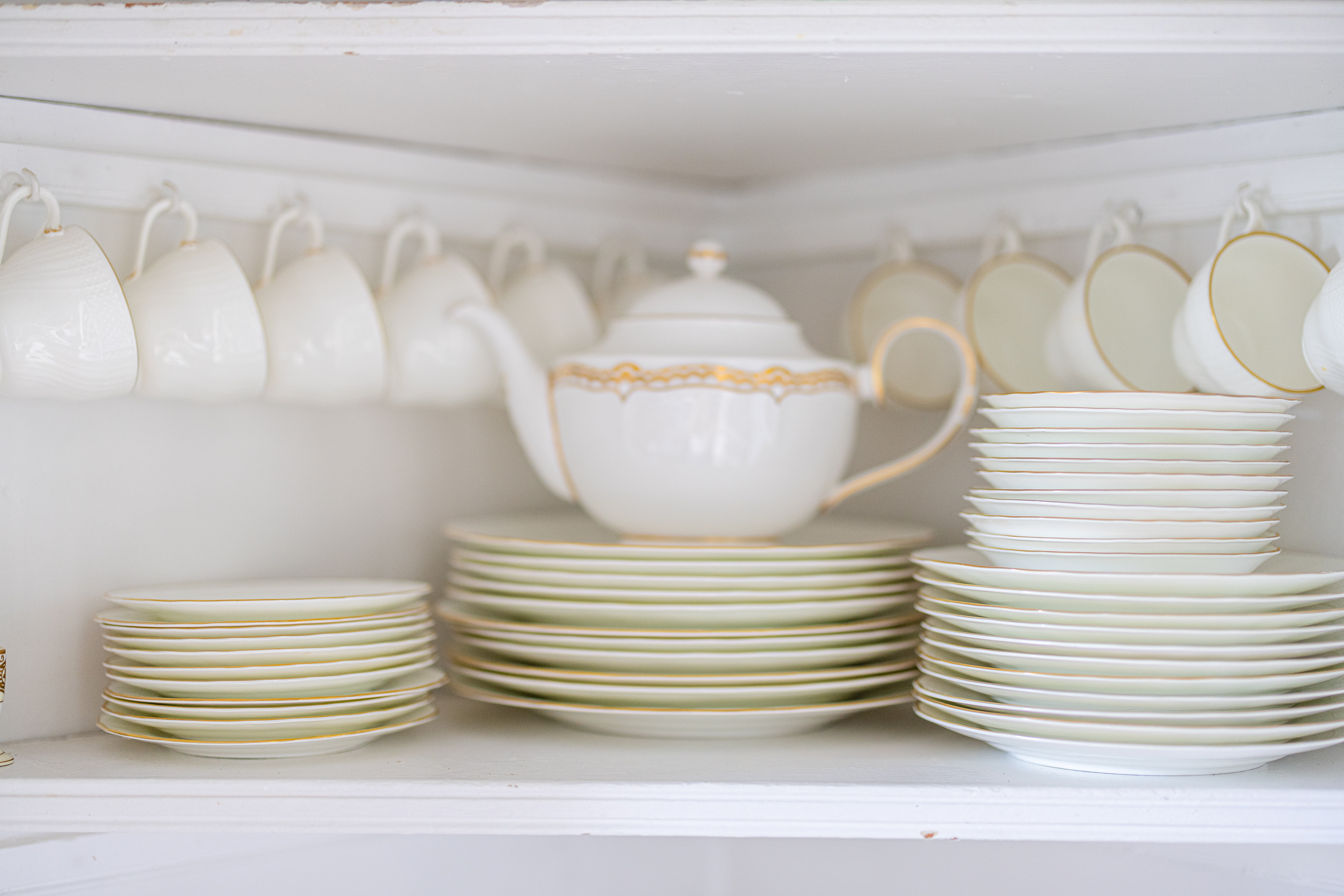
Collections — books, china, figurines, tools, craft supplies. Collections often represent who we were or who we hoped to be. Ask honestly: does this collection still reflect me? Will I use it? Does it bring me joy to see it — or just guilt that I’m not using it?
“You are not your belongings. You are what you do with your days, and who you love, and how you show up — none of which requires a four-bedroom house to contain.”
Practical Tips for the Move Itself
Once the sorting is done, there are practical decisions to make — and making them early reduces stress significantly. Consider donating to organizations that pick up directly from your home (Habitat for Humanity ReStores, local shelters, and Buy Nothing groups are excellent options). Estate sale companies can be a good fit for large quantities of furniture and valuables. And for items of genuine value — antiques, jewelry, art — a quick appraisal before donating is always worth the time.
When it comes to the move itself, work backwards from your move date and assign specific tasks to specific weeks. Packing room by room, labeling boxes by destination rather than just contents, and hiring professionals for the physically demanding work are all ways to protect your energy for the emotional labor of this season.
A Note On Asking For Help
There is no prize for doing this alone. Professional organizers and move managers exist precisely because this is real work — emotionally, physically, and logistically. Having our compassionate, experienced team by your side can make the difference between a process that breaks you down and one that genuinely feels like a new beginning. We are here to help you through this challenging time – contact us today so we can get started together.
Turn Your Passion For Organizing Into A Meaningful Business
If reading this resonates with you — not just as someone who has lived through a move or a transition, but as someone who feels called to walk alongside others during theirs — we want to tell you about something exciting.
DDH Home Organizing & Move Management is expanding nationwide through franchise opportunities designed for caring, driven individuals who want to build a meaningful business in their community. Our franchisees are people who understand, deeply and personally, how transformative the right support can be during a life transition. They are organizers, helpers, problem-solvers, and heart-led entrepreneurs.
As a DDH franchise owner, you’ll receive comprehensive training, proven systems, marketing support, and the backing of a trusted brand — so you can focus on what you do best: helping families navigate one of life’s most significant seasons with dignity and ease. No two days look the same. The work is real, the relationships are meaningful, and the impact lasts.
If this sounds like the chapter you’ve been waiting to write, we’d love to have a conversation. Click on the link below to learn more,
