



















Get Your Home Office Tax-Season Ready
Take Advantage of the Cold Weather
Cold weather has a way of slowing everything down. The days get shorter, the to-do list feels longer, and suddenly your home office becomes the “catch-all” space for everything you didn’t have time to deal with during the busy holiday seasons.
But here’s the good news: winter is the perfect time to reset your home office before tax season hits full force. A few hours of focused organizing now can save you days of stress later — and make your space feel calmer and more productive all season long.
Whether you run a business, work remotely, or just need to gather paperwork for your household, this guide will help you create a home office system that’s easy to maintain and tax-season friendly.
Step 1: Start With a Quick Office Reset (15 Minutes)
Before you buy bins or label anything, do a fast reset. Set a timer for 15 minutes and gather the obvious clutter:
- Loose papers (mail, receipts, forms, school paperwork)
- Random office supplies that don’t belong
- Cords, chargers, and tech accessories
- Cups, snacks, and “I’ll deal with this later” items
Put everything in one basket or box. Don’t sort yet — just clear your surfaces so you can actually see what you’re working with.
Quick win: A clear desk instantly reduces overwhelm and helps you focus.
Step 2: Create 3 Tax Season Zones
Tax season organization doesn’t have to be complicated — it just needs to be consistent. Set up three zones in your office:
1) Action Zone (Daily Use)
This is where you place things you need to deal with soon.
Examples:
- Bills to pay
- Forms to sign
- Documents to scan
- Receipts to log
A simple vertical file holder with 2–3 sections works perfectly here.
Suggested labels:
- To Do
- To File
- To Scan/Send
2) Tax Zone (January–April Focus)
This zone holds anything related to taxes so you’re not scrambling in March.
Examples:
- W-2s / 1099s
- Donation receipts
- Medical expense records
- Business expenses
- Mortgage interest documents
Use a folder, binder, or file box labeled “2025 Taxes” (or the current year). Keep it close — not buried.
3) Archive Zone (Long-Term Storage)
This is for paperwork you don’t need every day but should keep.
Examples:
- Past tax returns
- Insurance policies
- Home documents
- Warranty information
- Medical records
Store this in a drawer, filing cabinet, or a clearly labeled file bin.
Step 3: Sort Papers the Easy Way (Don’t Overthink It)
Now grab that basket of papers and sort into four simple piles:
- Trash/Recycling
- Shred (anything with personal info)
- File (important but not urgent)
- Taxes (anything that might be needed later)
You don’t need to decide where every single piece of paper belongs right now. You just need to get it into the right category so it stops living on your desk.
Pro tip: If you’re unsure whether something matters, put it in the Taxes pile. Your future self will thank you.
Step 4: Set Up a Receipt System You’ll Actually Use
Receipts are one of the biggest tax-season headaches — especially if they’re stuffed in bags, pockets, or your car.
Here are three easy options:
Option A: The “Drop Folder” Method
Keep a folder labeled Receipts and drop everything in there weekly.
Option B: The Envelope Method
Use a large envelope labeled by month:
- January
- February
- March
Option C: Digital Receipts (Best for Busy People)
Take a photo immediately and upload to one folder on your phone or cloud storage:
- “Taxes 2025”
- “Business Expenses”
- “Medical Receipts”
The best system is the one you’ll stick with — even when life gets hectic.
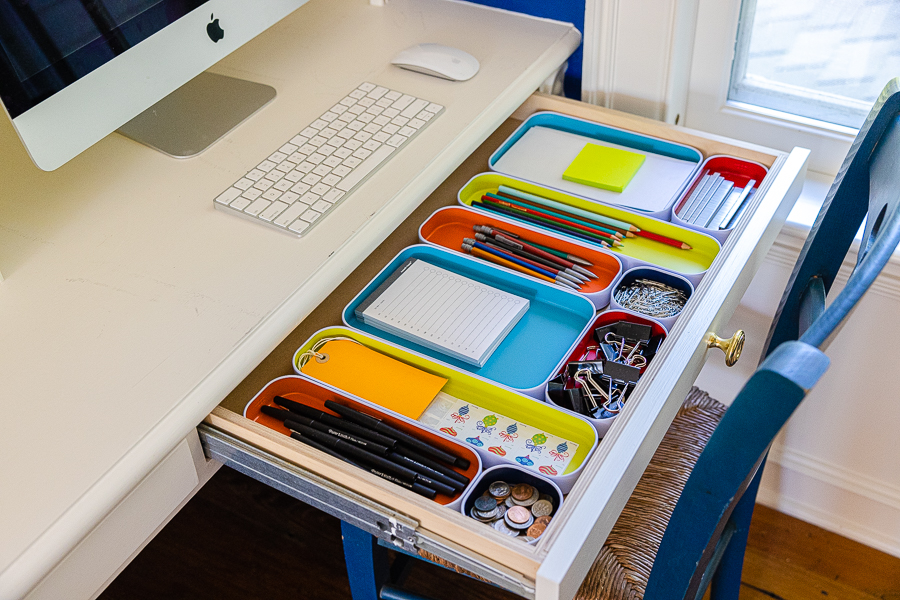
Step 5: Make Your Office Functional (Not Just Pretty)
A Pinterest-worthy office is great… but a functional one is even better.
Focus on organizing based on how you actually work.
Ask yourself:
- What do I use every single day?
- What do I need weekly?
- What can be stored away?
Keep daily items within arm’s reach:
- Pens, scissors, tape
- Planner/notebook
- Stapler
- Charging cords
- Your “Action Zone” folders
Store less-used items higher up or farther away:
- Extra paper
- Old notebooks
- Specialty supplies
- Backup ink/toner
Cold weather bonus: When your space is cozy and functional, you’re more likely to stay inside and get things done instead of procrastinating until spring.
Step 6: Use Indoor Winter Time To Build a Routine
Winter naturally creates more time at home — so instead of letting papers pile up, use that indoor time to build a habit that makes tax season painless.
Try this simple weekly routine:
The Sunday Reset (10 minutes)
- Empty your “To Do” folder
- File what’s finished
- Toss junk mail
- Add receipts to your system
The Monthly Mini-Review (20 minutes)
- Check your tax folder
- Make sure receipts are together
- Print anything important
- Confirm documents are labeled correctly
This small routine prevents the dreaded “tax avalanche” later.
Step 7: Don’t Forget the Comfort Factor
Cold weather makes us want to hibernate — and your home office should support that.
A few small upgrades can make a big difference:
- Add a warm desk lamp (soft lighting helps mood and focus)
- Keep a cozy throw nearby
- Use a small space heater if needed
- Set up a “work playlist” to stay energized
- Keep a mug and water bottle nearby (less wandering = more productivity)
Your office should feel like a place you want to spend time — not a space you avoid.
Final Thought – A Calm Office = A Calm Tax Season
Organizing your home office before tax season isn’t just about paperwork — it’s about peace of mind.
When everything has a place and your system is easy to maintain, you’ll feel more in control, more productive, and a whole lot less stressed when tax deadlines roll around.
And since winter keeps us indoors anyway, this is the perfect season to knock it out.
If you want help setting up a home office system that’s customized to your household (and easy to maintain year-round), our team is here to help, contact us today!